
Variety guide
What Is Maraş 18? Registration, Kernel Yield and Shell Characteristics
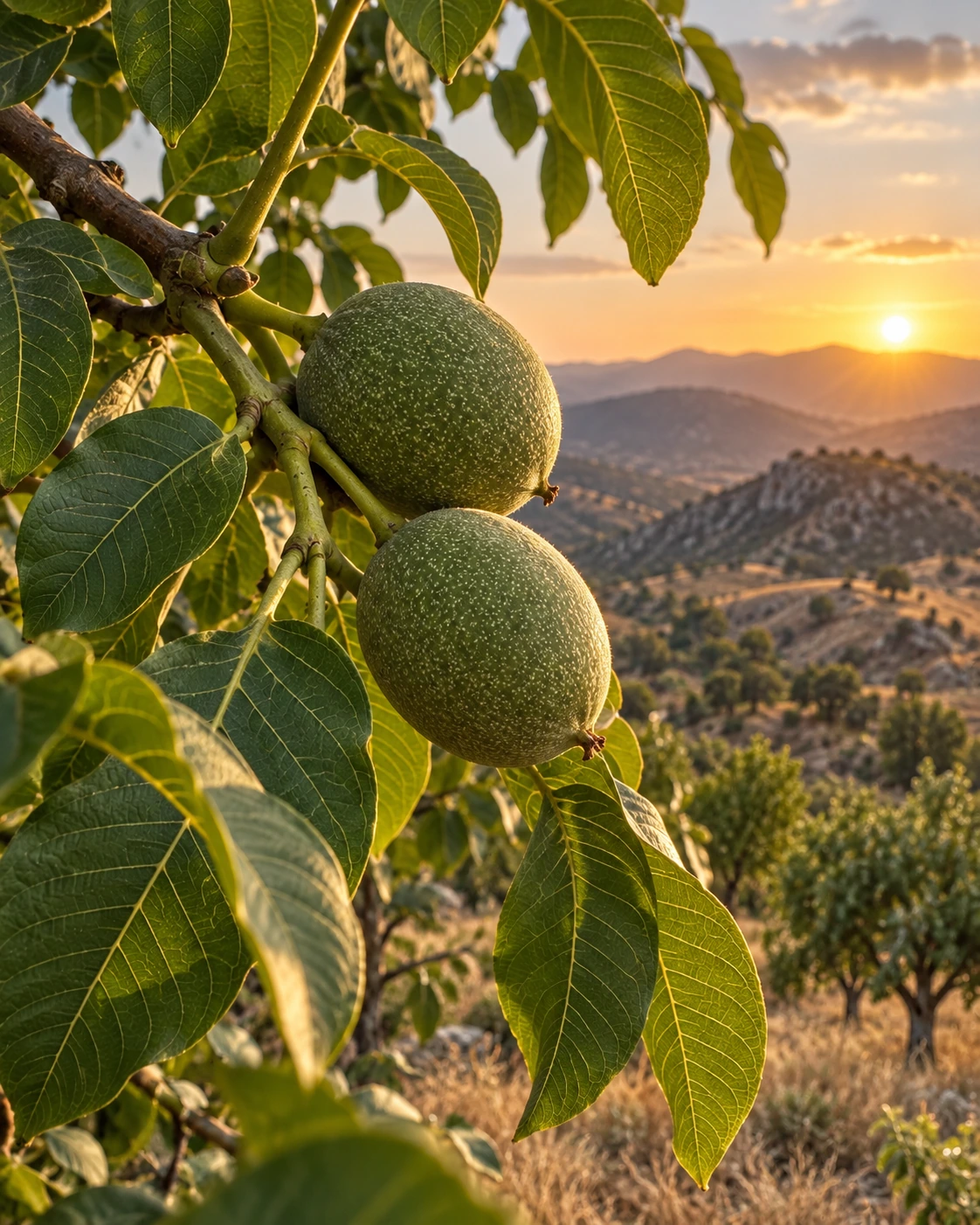
Maraş 18 is a walnut cultivar developed by selection in Kahramanmaraş and registered in 2009. Cultivar registration is different from geographical indication. Research averages do not guarantee identical kernel yield or shell traits in every pack.
How was Maraş 18 developed?
Walnut research at Kahramanmaraş Sütçü İmam University began in 1994; Maraş 18 was registered in 2009. DOĞAKA’s regional feasibility report records these dates. [1] Selection means identifying and evaluating existing trees with desired characteristics.
‘Grafted walnut’ describes the propagation method used to retain the variety’s characteristics. A seed-grown tree cannot simply be expected to reproduce identical fruit. Asking about the cultivar and propagation gives a clearer description than ‘large walnuts’ alone.
Is a registered variety a geographical indication?
No. A geographical indication is a separate form of protection for a product whose quality, reputation or characteristics are associated with its geographical origin. TÜRKPATENT explains this distinction through its geographical indication system. [2]
Registration of a walnut cultivar does not establish that every product bearing that name qualifies to use a geographical indication. This article describes Maraş 18’s variety registration; it makes no claim of a geographical indication certificate for Ceviz Vadisi products. Ask sellers to distinguish the two.
How should you read kernel and shell measurements?
Kernel percentage is the kernel’s share of the in-shell weight. A study under Bursa conditions reported Maraş 18 averages of 14.41 g nut weight, 50.89% kernel and 1.69 mm shell thickness, with a light kernel classification. [3]
Using that study’s percentage, 1 kg of in-shell walnuts corresponds to roughly 509 g of kernels. This is an arithmetic illustration of a research average, not a guarantee for Ceviz Vadisi packs. Different research averages quoted on product pages should likewise not be read as fixed sales commitments.
Tree yield and kernel percentage are different
Yield per tree describes the total crop produced by a tree. Kernel percentage describes how much of an individual in-shell nut is kernel. A high value for one does not guarantee a high value for the other. Buyers usually find usable kernel quantity and shelling convenience more immediately relevant.
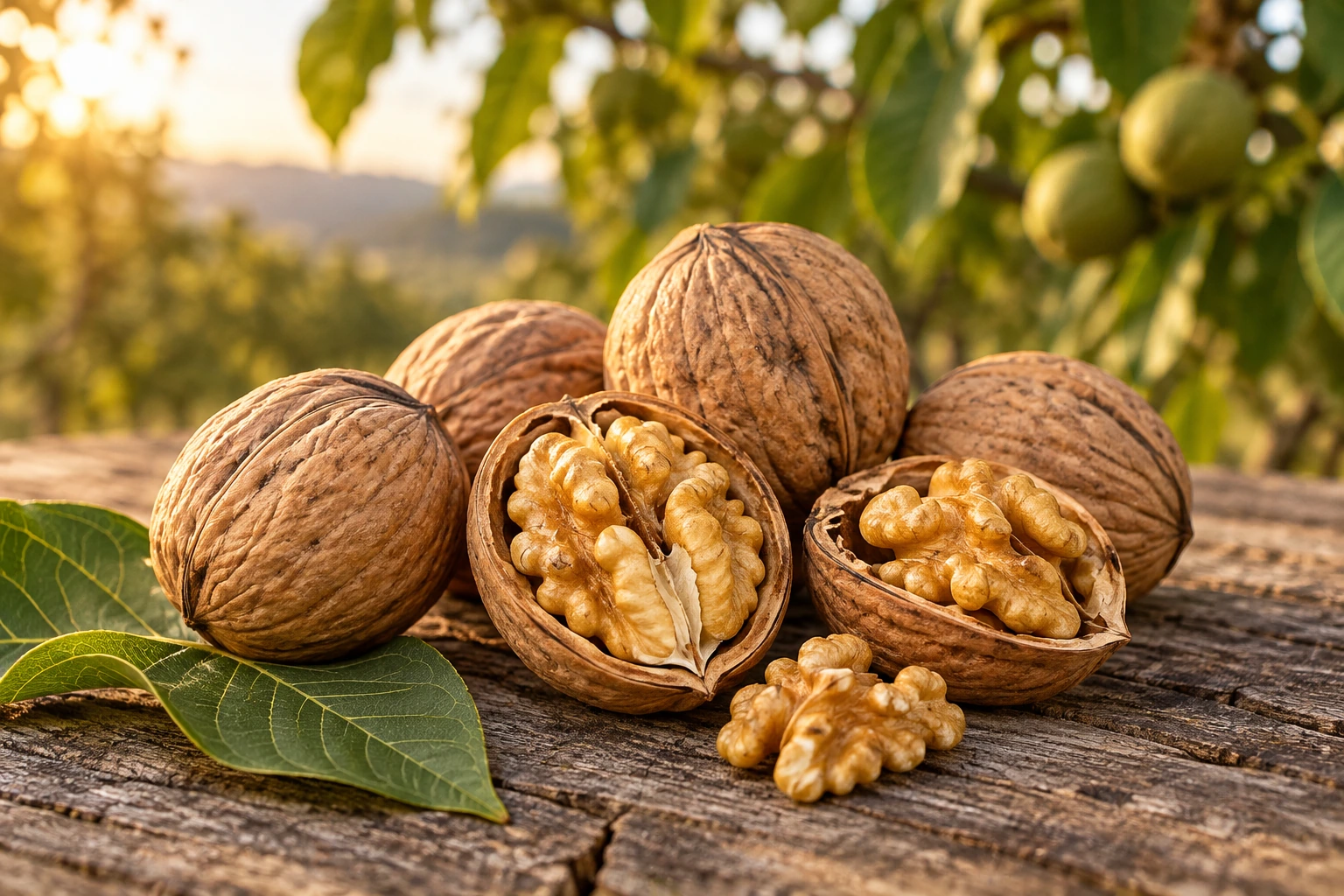
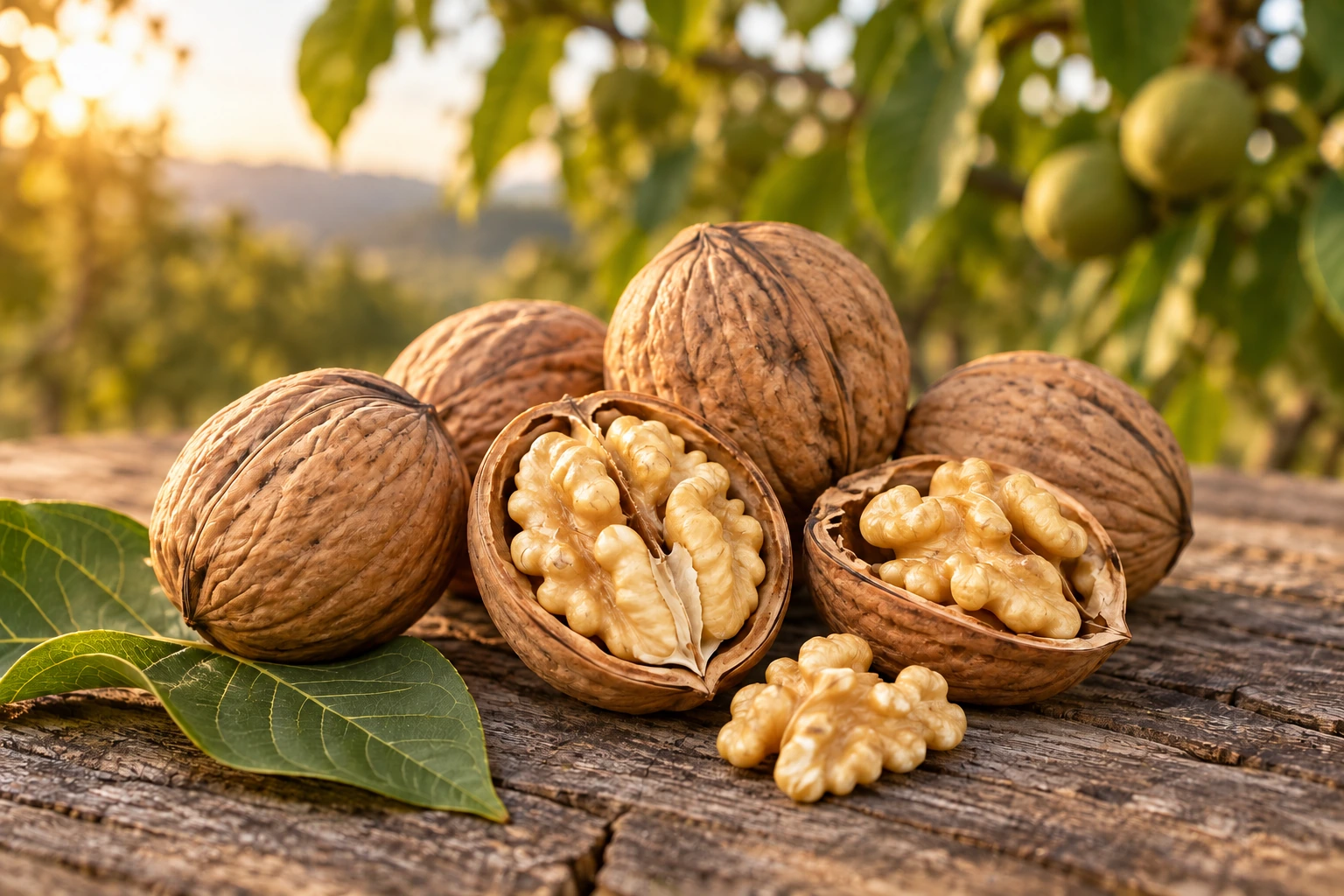
Consider a ‘thin shell’ claim in practical terms: how does the shell crack, how many halves stay intact and how much is lost while shelling? Examining several samples in the same way is more useful than judging a cultivar from one photograph.
Using Maraş 18 in your kitchen
Whole halves work for breakfast displays and dessert toppings; smaller pieces can go into cakes, biscuits and salads. Sorting pieces by intended use after shelling helps you make use of each sound kernel. A small piece is not automatically a poor-quality piece.
Ceviz Vadisi sells Maraş 18 in its shell in 5, 10 and 15 kg packs. When comparing it with local walnuts, consider flavour, shelling and storage space as well as size. Confirm the current product details, price and delivery before ordering.
Frequently asked questions
Does Maraş 18 mean every nut weighs 18 g?
No. It is a cultivar name. Individual nut weights and pack kernel percentages can vary.
Are grafted and local walnuts opposite categories?
Not botanically: Maraş 18 is itself a Turkish-origin cultivar. On this site, ‘grafted’ identifies Maraş 18 and ‘local’ identifies our walnuts from different orchard trees.