

Kitchen preparation
How to Crack Walnuts Without Crushing the Kernels
Use a suitably sized nutcracker, increase pressure gradually and stop at the first crack to remove the shell in sections. Intact halves are not guaranteed: the shell structure, kernel filling and tool all affect the result.
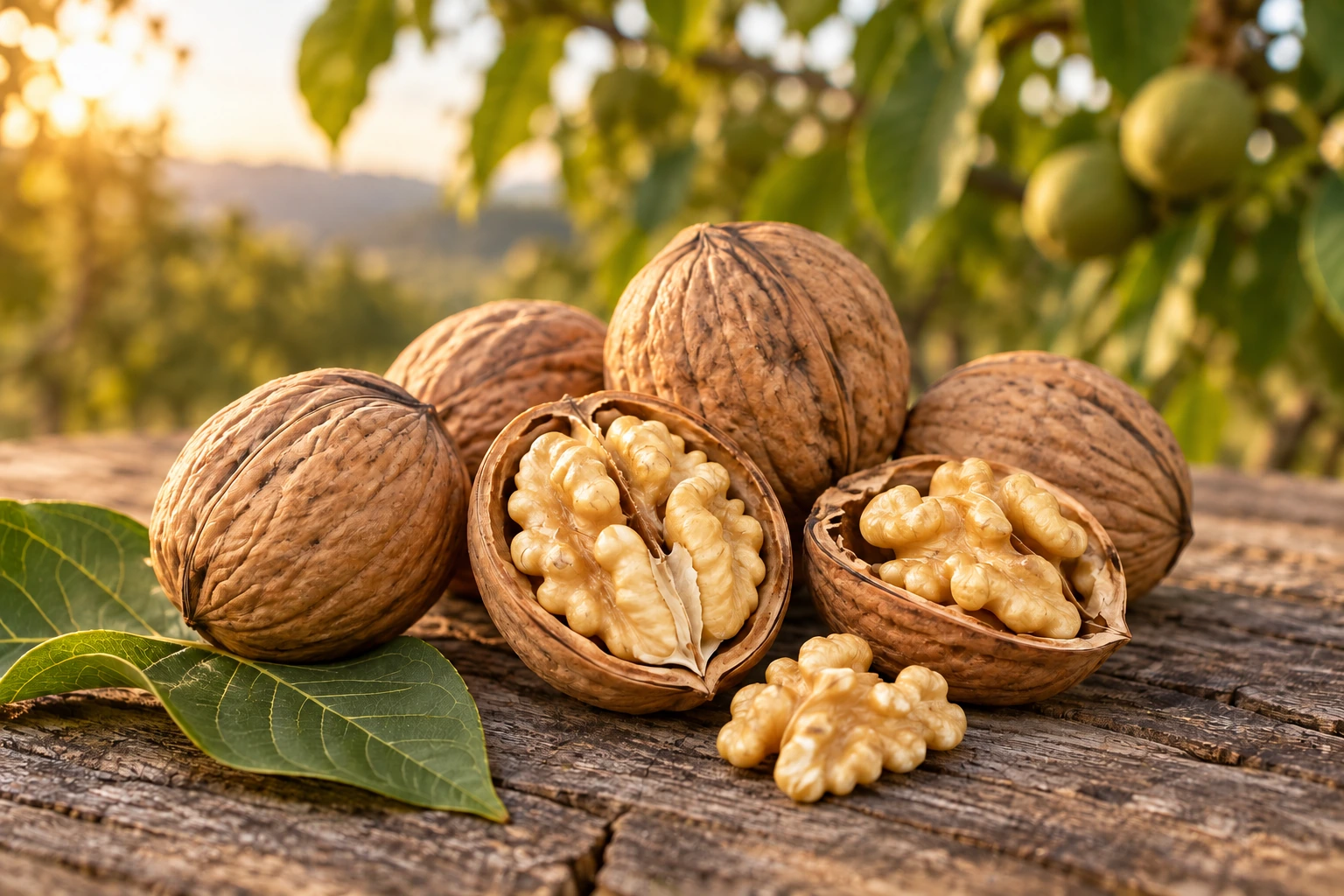
Decide what the recipe needs
Large halves can be useful for decorating a dessert, while a cake or sauce may need smaller pieces. Producing perfect halves does not have to be the goal for every recipe. First establish the amount of edible kernel required; an in-shell pack weight is not the same measurement.
USDA grading standards distinguish shell defects from kernel defects. [1] Likewise, successful cracking and quality assessment are separate tasks. A neatly extracted half still needs checking. This guide concerns opening dried hard-shell walnuts for kitchen use, rather than removing green hulls after harvest.
Prepare the cracker and work surface
Choose a nutcracker that holds the walnut securely and sits comfortably in your hand. Work over a rimmed tray to collect shell pieces. Set out a separate bowl for clean kernels and check that it contains no fragments from an earlier batch.
Do not try to crack walnuts with your teeth or open them with a knife in your palm. Follow the tool’s instructions and keep fingers clear of its closing parts. If the nut does not sit correctly in the jaws, reconsider its position or the tool’s size rather than simply applying more force.
Release pressure after the first crack
Squeeze in small increments instead of closing the cracker fully in one movement. When the shell cracks, stop and inspect it over the tray. Remove the opened section; if necessary, reposition the remaining shell for another light crack. The aim is to open the shell without continuing to compress the kernel.
This is a home-kitchen technique, not a universal angle or force setting. Observe the first few nuts and adjust your movement. When a shell is unusually resistant, avoid excessive force and choose equipment suitable for the job rather than exceeding the tool’s intended capacity.
Separate kernels and fragments carefully
Remove loose shell sections and gently separate the dry internal partitions. Before transferring the kernel to its bowl, check its folds for small hard fragments. A final look on a light-coloured plate can be a useful part of a tidy preparation routine.
Do not taste visibly mouldy nuts to assess them: USDA recommends discarding mouldy nuts. [2] Keep questionable samples out of the clean-kernel bowl. A kernel breaking during shelling and a kernel being spoiled are different findings and should not be treated as interchangeable.
Use halves and smaller pieces deliberately
Reserve larger halves for presentation and clean smaller pieces for salads, baking or sauces. Weigh only the edible portion. If a recipe asks for 100 grams of walnut kernels, shells and internal partitions do not belong in that measurement, and a fixed count of nuts cannot guarantee the weight.
Compare Ceviz Vadisi’s Maraş 18 and local walnuts with your preparation needs in mind. No fixed percentage of intact halves is promised for a pack. Crack an amount that suits your cooking plan and use the storage guide for kernels that will not be used immediately.
Frequently asked questions
Does every thin-shelled walnut yield intact halves?
No. Shell thickness is only one factor. Internal structure, the tool and the pressure applied also affect the outcome.
Are small walnut pieces only suitable for desserts?
No. Clean pieces can also be used in salads, bread, vegetable dishes and sauces. Choose their size for the texture of the recipe.