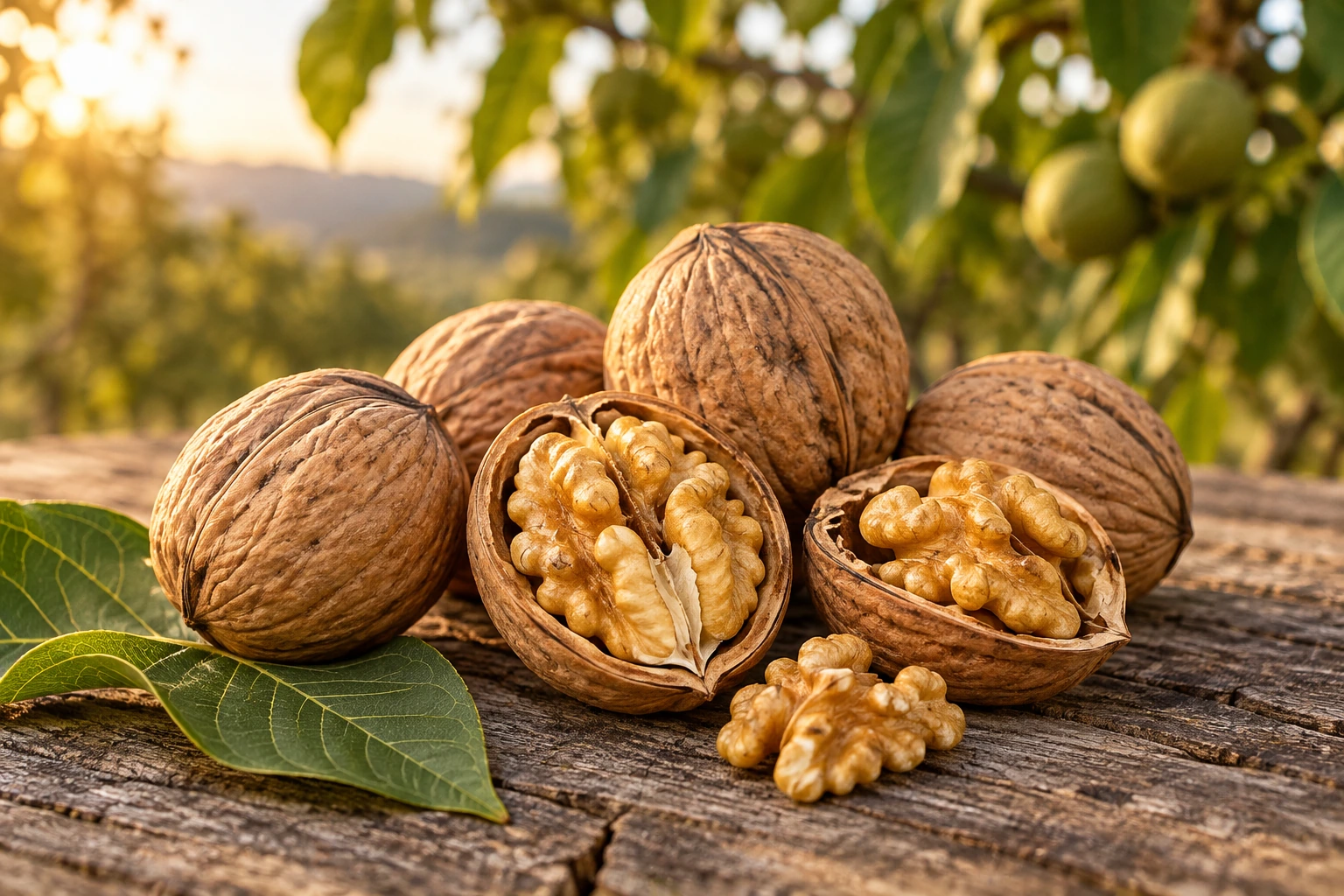

Ideas for the table
Cooking with Walnuts: Sweet and Savoury Ideas
Walnuts work in more than desserts. Try large pieces in salads and breakfasts, smaller pieces in baking and finely ground kernels in sauces. Choose the texture you want first, then weigh the edible kernels your recipe requires.
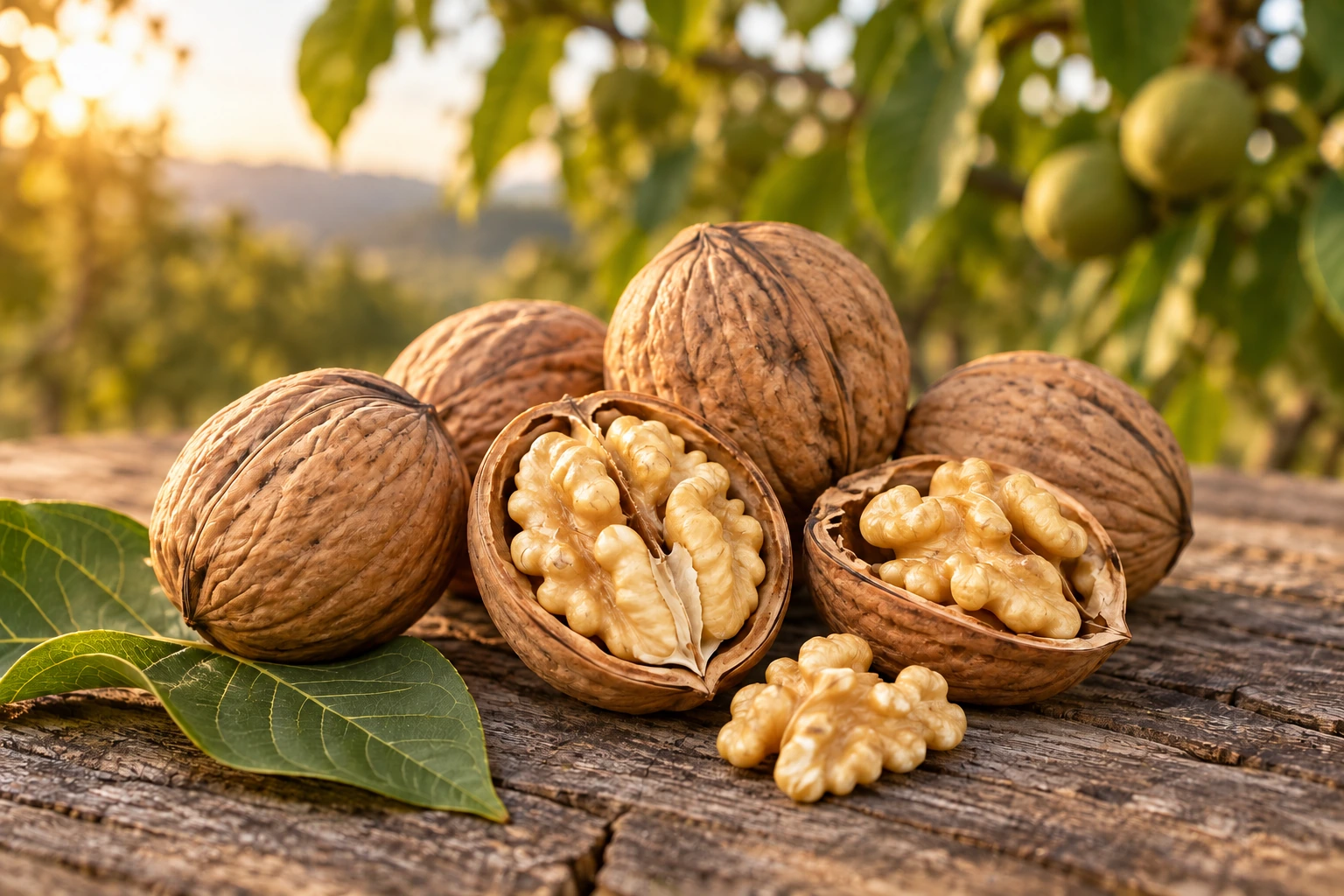
Choose the piece size for the dish
Before chopping a handful of walnuts, think about the texture you want. Visible halves suit decoration, coarse pieces can sit comfortably in a salad bite, and smaller pieces distribute through a filling. Consider how the nuts will be eaten as well as how they look.
Short food-processor pulses keep a more distinct texture, while longer processing moves towards a paste. California Walnut Commission highlights this difference in its kitchen guidance. [1] Pause to inspect the result. Start small because a paste cannot be returned to its original pieces.
Add walnuts to salads and vegetables
Try walnuts with greens, cooked pulses or roasted vegetables already available in your kitchen. Mix the dressing separately, combine it with the vegetables and add walnuts near serving if you want distinct pieces. One basic salad can then be adapted for several different presentations.
Adjust familiar ingredients such as lemon, olive oil or pomegranate molasses gradually. These are serving ideas rather than fixed recipes with tested ingredient ratios. Trial a small plate and record the balance you prefer before preparing the same idea for a larger table.
Keep measurements consistent in baking
When a recipe specifies grams of walnut kernels, weigh them after shelling. A cup of large halves need not weigh the same as a cup of finely chopped pieces. A scale makes a second attempt easier to repeat than changing cups or guessing from how full they look.
Do not replace all the flour with walnuts simply to add a walnut flavour; begin with an established recipe’s quantities. Pieces mixed into cookie dough and halves placed on top perform different roles. Deduct a decoration portion from the total so the final step does not add more walnuts than intended.
Control texture in sauces and spreads
California Walnut Board gives ground walnuts in sauces and pesto-style mixtures as examples of their kitchen uses. [2] For a small home mixture with walnuts, favourite herbs and olive oil, add liquid gradually and inspect the texture after each addition.
In a yogurt-based mixture, decide how clearly you want to feel the walnut pieces. Fine kernels produce a more even mixture; coarse pieces keep a noticeable texture. Add garlic or acidic ingredients gradually too, as a practical way of keeping control of the flavour balance you prefer.
Build walnuts into a preparation plan
At breakfast, try walnuts alongside yogurt, oats or fruit. Write a short list of the day’s intended uses: breakfast, a lunch salad and perhaps an evening sauce. The purpose is to use the prepared kernels deliberately rather than add extra quantities without noticing.
Ceviz Vadisi sells in-shell walnuts; these ideas do not mean that prepared sauces, spreads or roasted products are offered for sale. Tell guests clearly when a dish contains walnuts. Consult the storage guide for leftover dry kernels, and do not assign a yogurt mixture the same handling conditions as dry nuts.
Frequently asked questions
Does one cup of walnuts always weigh the same?
No. Cup size, piece size and packing affect the result. Measure in grams when you want a repeatable recipe.
Should walnuts be toasted before every recipe?
No. Plain or toasted use depends on the desired flavour and texture. Follow the recipe and use a small trial to find your preference.