
Nutrition
How Many Walnuts a Day? Portions, Heart Health and Brain Research
About 28–30 g of shelled walnuts is a practical serving reference, not a requirement for everyone every day. Walnuts can fit a balanced diet, but they are not a treatment or a proven way to improve everyone’s memory.
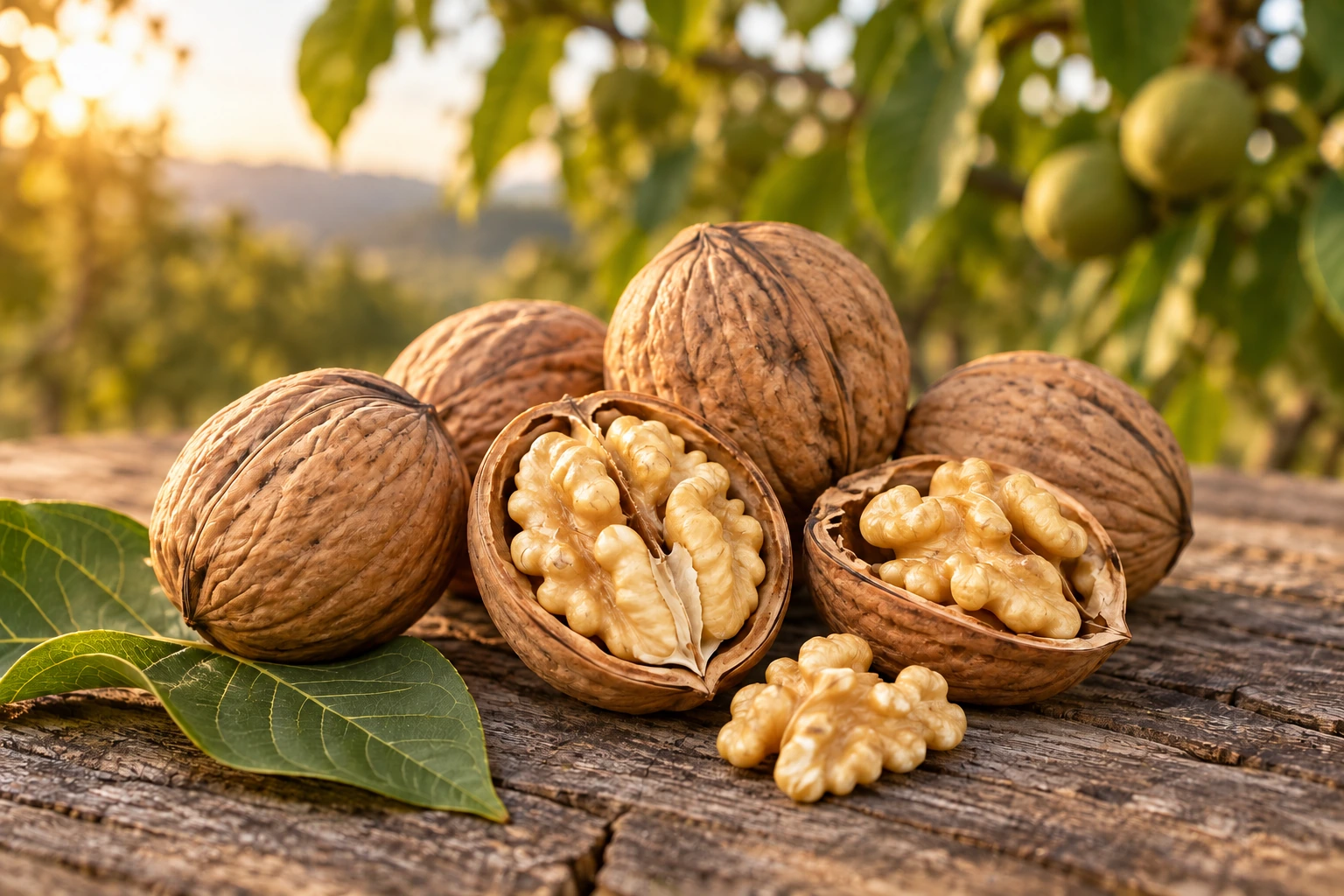
Weigh kernels instead of counting nuts
The American Heart Association gives a small handful, or about 28 g, as an example serving of nuts. [1] The number of walnuts varies: small local nuts and large Maraş 18 nuts do not provide identical kernel weights. A whole kernel and a half are also different measures.
Weigh 28–30 g of kernels once and see how that amount looks in your usual bowl. Reusing the bowl makes the portion easier to picture. This weight excludes shells. Your other meals and individual requirements determine how it fits your day.
Which omega-3 does a walnut contain?
Walnuts provide ALA, a plant omega-3 fatty acid. NIH lists about 2.57 g of ALA per 28 g of English/Persian walnuts. Conversion of ALA into EPA and DHA is limited, so the omega-3 content of walnuts and fish should not be treated as equivalent. [2]
These are general composition data, not laboratory results for every Ceviz Vadisi pack. A high oil content does not establish an identical omega-3 level across varieties or mean that eating more is always better. Strong ‘vitamin E powerhouse’ claims should also not be made without suitable product evidence.
What does heart-health research show?
The two-year WAHA walnut intervention reported a modest reduction in LDL cholesterol among healthy older participants. This does not guarantee the same effect in every age group or prove prevention of heart disease. [3]
In practice, think of walnuts as one option within your existing meals and snacks. When adding them to breakfast, consider your whole day’s food rather than building a diet around a single ingredient. This article is not a basis for changing medication or treatment.
Is a memory benefit certain?
The cognitive study in the same research programme found no significant overall cognitive benefit after two years. Subgroup findings need further investigation. It would be inaccurate to say walnuts definitely strengthen memory or prevent dementia. [4]
A food’s shape, resemblance to the brain or individual nutrients cannot substitute for demonstrated human outcomes. When reading research, check who participated, how long they were followed and what was measured. General dietary advice and treatment claims are different things.
Easy ways to use your portion
- Add a measured portion to yoghurt or oats.
- Break kernels into large pieces just before adding them to a salad.
- Set aside a breakfast portion instead of continually eating from a large bag.
Choose between Maraş 18 and local walnuts according to flavour, shelling convenience and your recipes. Kahramanmaraş origin alone does not prove an additional health benefit. Do not eat walnuts if you have a walnut allergy. For specific dietary needs, agree a portion with a doctor or dietitian. This article provides general information.
Frequently asked questions
Does 30 g of in-shell walnuts count as this portion?
The reference is for edible kernels. The same weight of in-shell walnuts provides less kernel, and the amount varies by product.
Can walnuts replace medication?
No. Nutrition research is not personal treatment advice, and walnuts should not replace prescribed medicine.