
Orchard and origin
What Makes Kahramanmaraş Walnuts Special? Light Kernels and Thin Shells
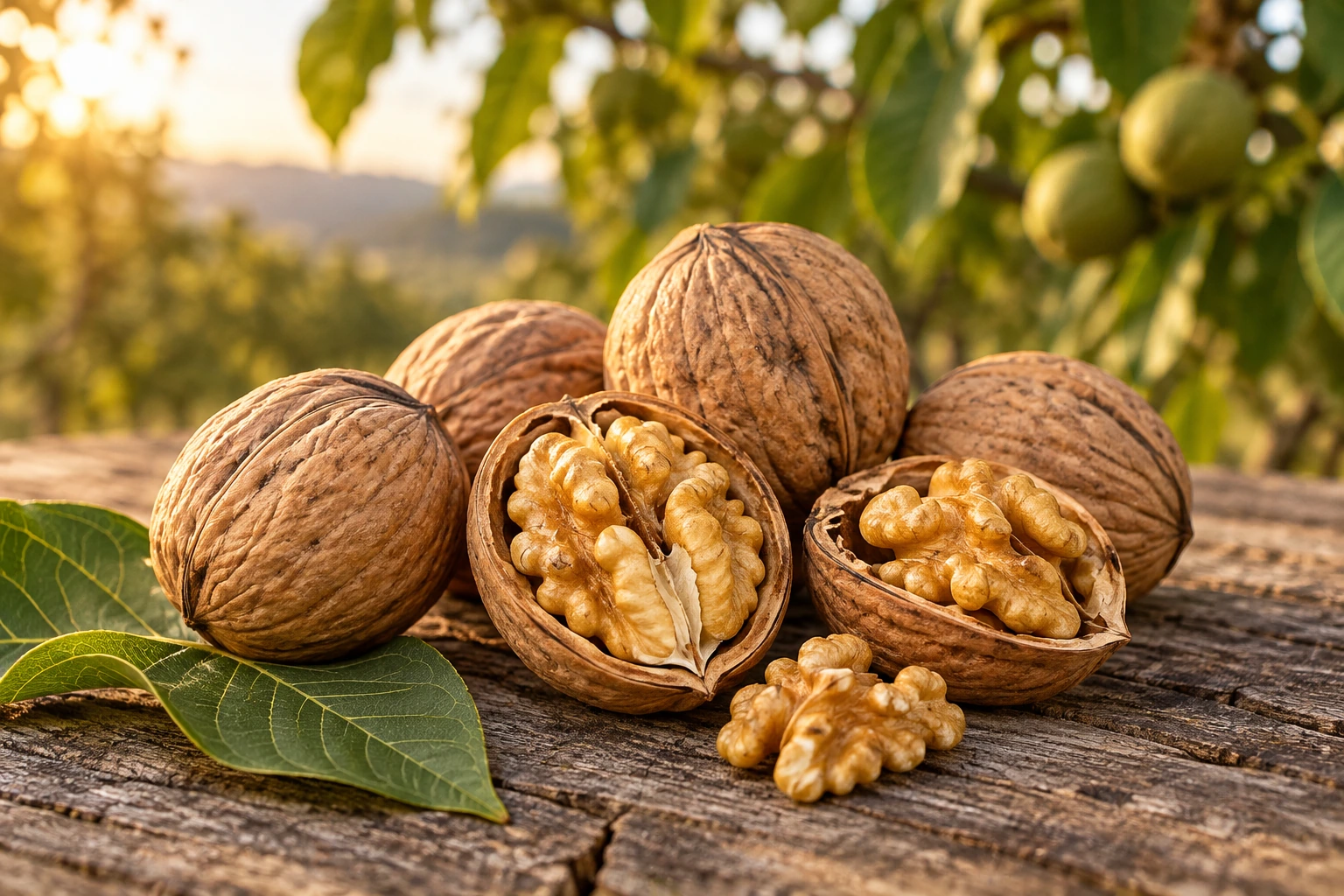
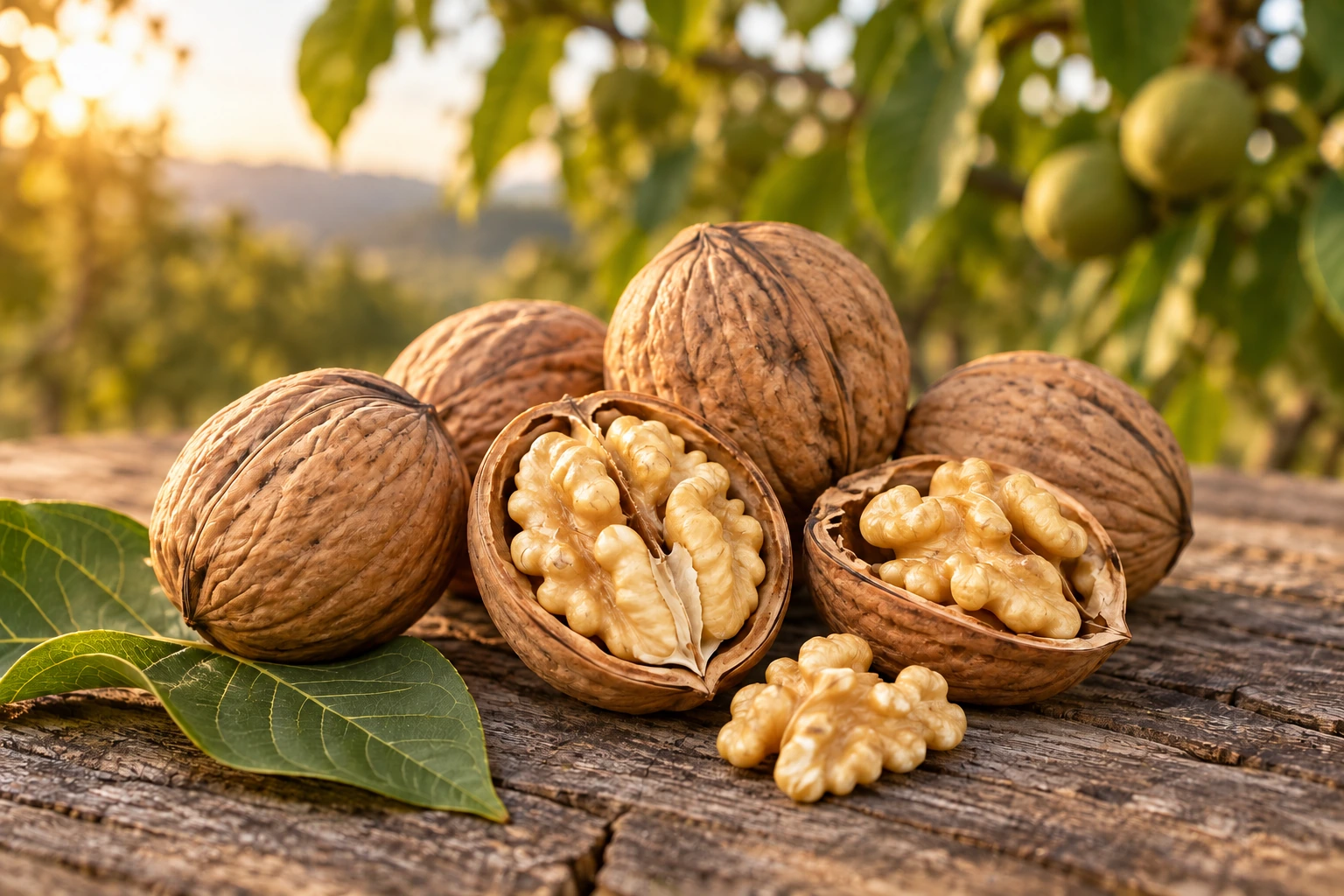
A walnut’s orchard, variety, handling after harvest and kernel quality all matter. Maraş 18 is known for its light kernels, but not every walnut grown in Kahramanmaraş has the same shell thickness or colour.
Is Kahramanmaraş walnut a single variety?
The name Kahramanmaraş walnut generally describes walnuts grown in the region. Maraş 18 is a specific cultivar. Knowing the difference helps when shopping: a regional name describes origin, while a cultivar name identifies the fruit characteristics you can discuss with the seller.
Ceviz Vadisi offers grafted Maraş 18 and local walnuts from different trees in our orchard. Local walnuts may vary in size, shell and kernel colour. That diversity is not automatically a defect; it helps you decide which product suits your kitchen.
Consider altitude, climate and soil together
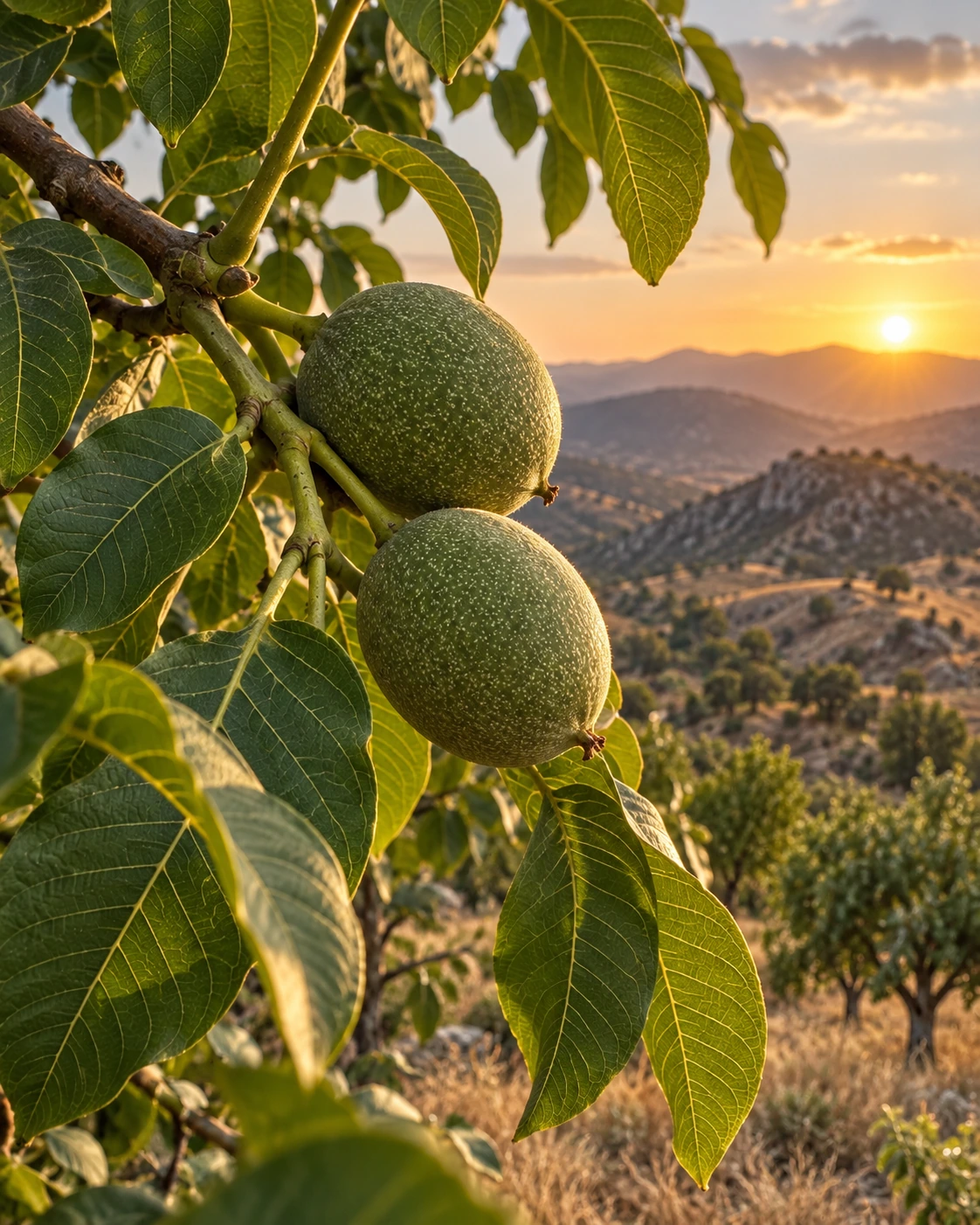
An orchard cannot be described by its elevation alone. Sunshine, the season’s weather, access to water and soil conditions need to be considered together. High altitude by itself does not guarantee lighter kernels, thinner shells or superior nutrition.
Our high-altitude setting and irrigation with natural spring water are part of Ceviz Vadisi’s growing story. Read that story alongside the variety and current product information. It would be misleading to promise an exact oil percentage or an identical flavour every year without appropriate evidence.
What do light kernels and thin shells mean?
The everyday expression ‘white kernel’ usually means a light-coloured walnut kernel. Light pieces can look attractive in a presentation, but colour alone is not proof of freshness. When cracking a walnut, also consider how readily the kernel halves come out intact.
Quality standards treat kernel colour and shell or kernel defects as separate criteria. Rather than judging an entire pack from one photograph, examine several examples if possible. [1]
Choose for the dish you want to make
Large halves may suit a breakfast plate or a cake topping. For a cake mixture, sauce or recipe using ground walnuts, flavour and carefully cleaned kernels can matter more than the size of each piece.
Explore Maraş 18 if you value easy shelling and the characteristics of a named variety. Consider local walnuts if you enjoy the diversity of different orchard trees. Both products are sold in their shells: the pack weight is not the weight of the edible kernels.
Three useful questions before ordering
- Is this Maraş 18 or a selection from different local trees?
- What harvest and storage information is available, and can I see a current sample?
- Which pack fits my household’s use and storage space: 5, 10 or 15 kg?
These questions offer a more useful comparison than descriptions such as ‘large’ or ‘white’ alone. You can appreciate the orchard’s story while also clarifying the characteristics of the walnuts you are buying.
Frequently asked questions
Are all Kahramanmaraş walnuts thin-shelled?
No. Shell thickness can vary with the variety and tree. Maraş 18 and mixed local walnuts should not be expected to be identical.
Does spring-water irrigation mean certified organic?
No. Irrigation water and organic certification are separate matters. Ceviz Vadisi does not make an organic certification claim here.