
After harvest
How to Hull and Dry Walnuts After Harvest
Freshly harvested walnuts are hulled and then dried with suitable air circulation. A dry-looking shell does not establish that the kernel is ready for storage. Already dried walnuts bought for the kitchen should not be put through the fresh-harvest process again.
Which layer is being removed?
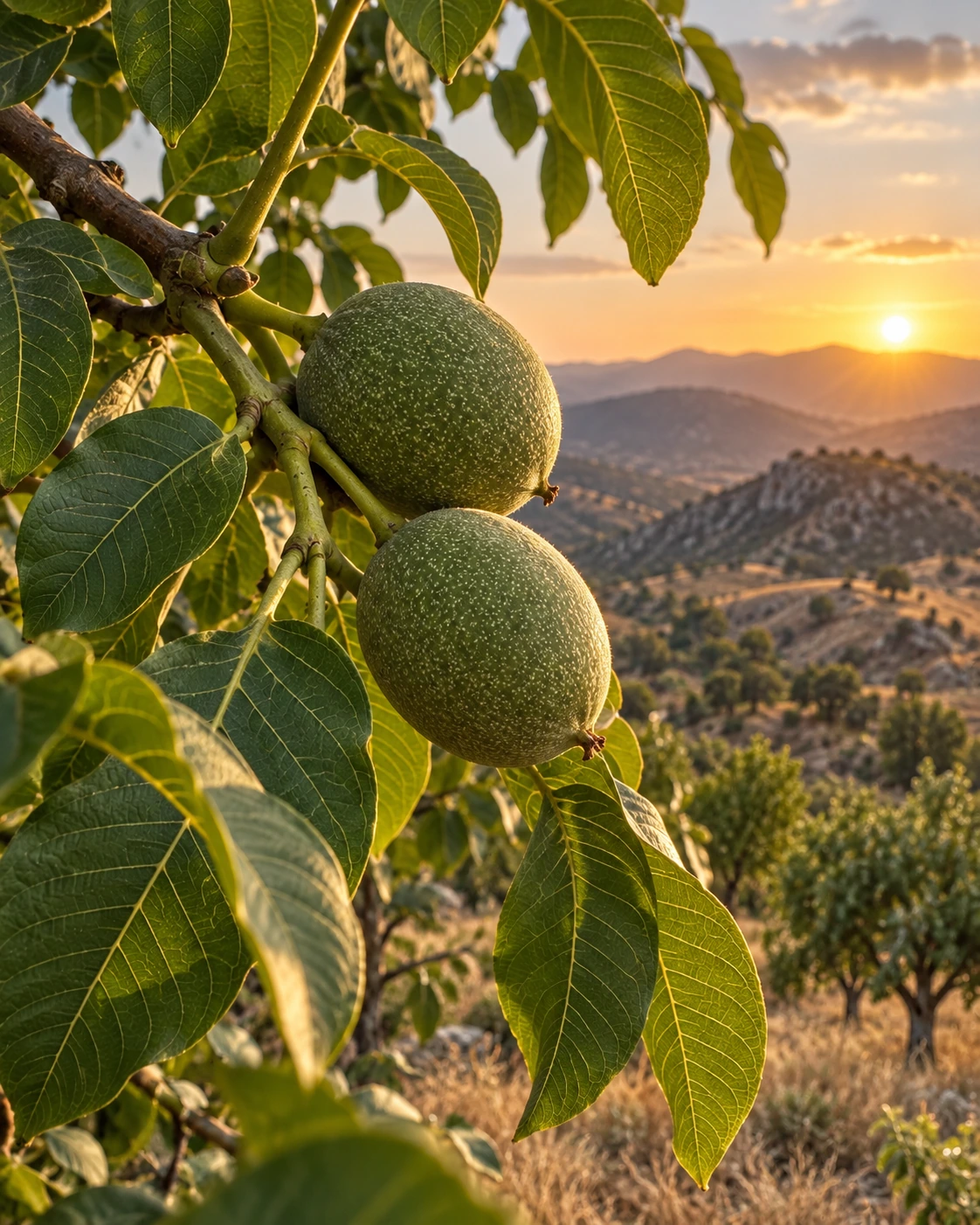
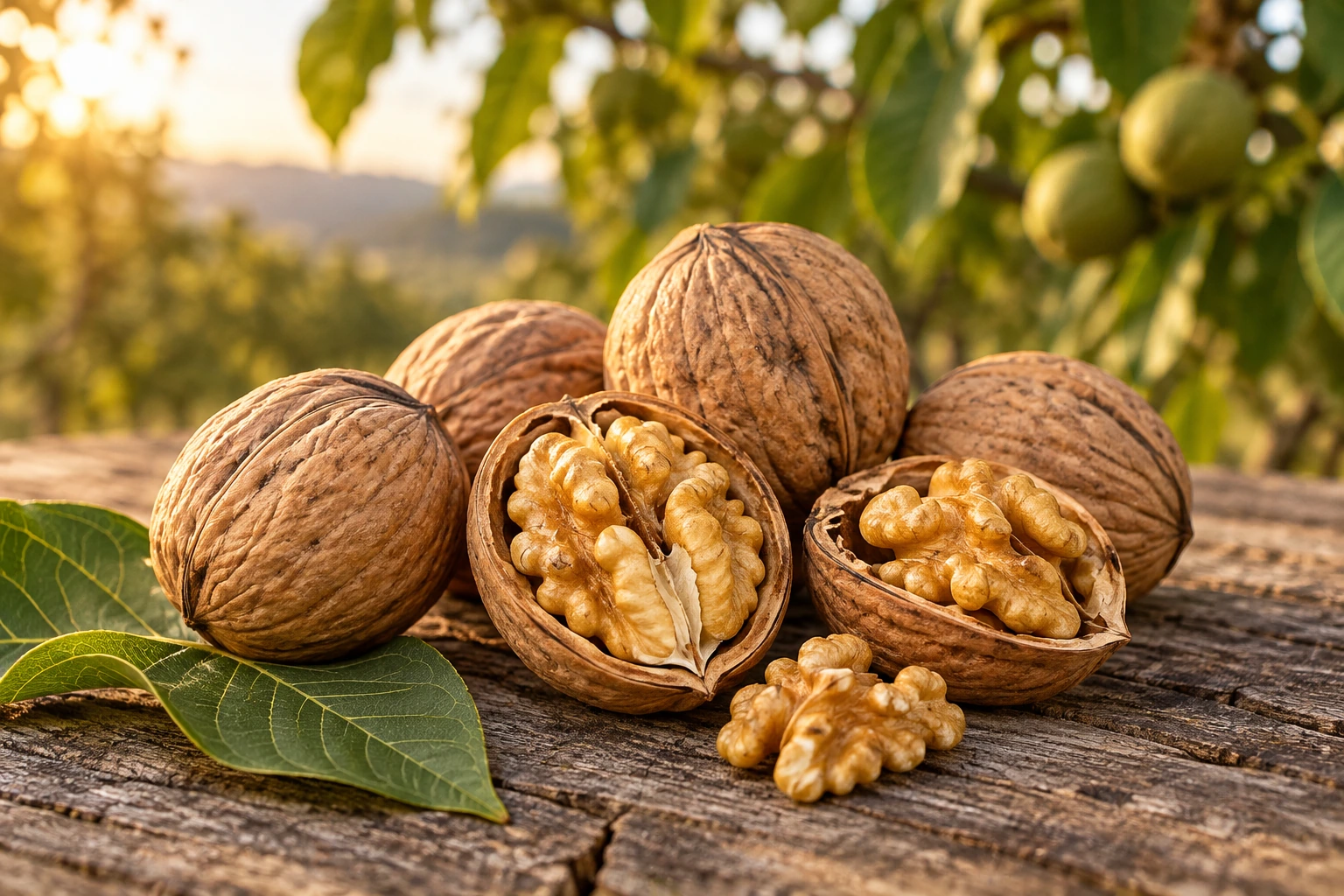
The green hull is the fleshy outer covering of the fruit on the tree. It is different from the woody shell opened with a nutcracker and from the thin skin on the kernel. Naming these layers correctly helps prevent confusion when discussing equipment or product condition with a grower.
If the product on your counter is already dried in-shell walnuts, do not start this harvest process again. First identify whether a fresh outer hull is present or whether only the dry hard shell remains. Hulling and kitchen cracking are different tasks requiring different equipment.
Prepare the work area and equipment
Use gloves when handling green hulls, which can stain hands. [1] Collect the exposed shells and removed hull material in separate containers. Arrange the work area so processed nuts, unprocessed fruit and waste do not repeatedly mix together.
For a small home batch, use a comfortable work surface and a suitable tool; do not force a blade into a resistant hull while holding it in your palm. With machinery, follow the manufacturer’s cleaning and protective-equipment instructions. A green-hull remover and a hard-shell cracker are not interchangeable.
Give airflow a place in the drying plan
OSU Extension stresses air circulation during drying and warns that excessive heat can reduce quality. [1] Use an arrangement that exposes the batch to air instead of inspecting only the top of a deep pile. Contact surfaces and containers should be clean and suitable for food.
Do not copy a neighbour’s drying time as a fixed rule. Two batches may begin with different moisture levels and experience different conditions. Record the start, any changes of position and your observations so the next decision is based on the actual batch rather than on memory.
Check the inside as well as the shell
UC IPM’s home-scale check is to open a sample and see whether the kernel snaps rather than bends. This provides an indication of drying readiness. [2] A dry external surface alone does not establish the condition of the interior.
Sample several parts of the batch rather than relying on one nut. This practical check does not replace commercial moisture measurement or batch acceptance testing. For larger quantities prepared for sale, agree suitable procedures with an agricultural or food specialist instead of announcing an unmeasured moisture percentage.
Should already dried nuts be washed again?
Cleaning during fresh-harvest processing is a different question from washing dry nuts in your kitchen. UC ANR advises against washing dry in-shell walnuts before storage because added moisture can cause problems. [3] Do not rewet a ready-dried product and then close it inside a jar.
Label the batch with its date and condition when preparation is complete. Continue to the separate storage guide for longer-term handling. This article concerns preparation after harvest; it does not assign a universal shelf life or certify a batch’s safety through visual inspection.
Frequently asked questions
Is drying after harvest the same as toasting?
No. Drying reduces moisture in a fresh product; toasting is a kitchen step used for flavour and texture. Do not use a toasting setting as a harvest-drying programme.
Does a dry shell always mean a dry kernel?
No. Check the interior of samples too. Commercial batches also require appropriate measurement and acceptance procedures.